Snowball vs Avalanche: Which Debt Payoff Method Fits You?
By Federico Napoletani, Else Court · Updated 2026-10-18

How does the debt snowball method work?
- List your debts from the smallest balance to the largest.
- Pay the minimum on every debt.
- Put every extra dollar on the smallest balance until it is gone.
- Move the whole payment, minimum plus extra, to the next smallest debt, and repeat.
The method ignores interest rates when it chooses the order. Its strength is motivation: each cleared debt is one fewer account to manage and one more visible result.
How does the debt avalanche method work?
The steps are the same, but the order is different: list debts from the highest interest rate (APR) to the lowest and put the extra payments on the highest rate first.
Because the most expensive debt is cleared first, the avalanche usually leaves you with less total interest than the snowball. The first debt it targets may be large, so the first win can take longer to arrive.
What is the difference, side by side?
| Snowball | Avalanche | |
|---|---|---|
| Order of payoff | Smallest balance first | Highest interest rate first |
| Main advantage | Quick wins and fewer accounts sooner | Usually less total interest |
| Main drawback | Can cost more interest | First debt may take a long time to clear |
| Best when | Motivation is your main challenge | Cost is your main concern and you can stay patient |
What does it look like with real numbers?
Take three debts. The balances and rates are examples only.
| Debt | Balance | APR | Minimum payment |
|---|---|---|---|
| Store card | $400 | 15% | $25 |
| Credit card | $3,000 | 24% | $90 |
| Personal loan | $1,200 | 8% | $60 |
With the snowball, the order is the store card ($400), then the personal loan ($1,200), then the credit card ($3,000). With the avalanche, the order is the credit card (24%), then the store card (15%), then the personal loan (8%). In both cases you keep paying the minimum on the others while the extra amount goes to the target.
The credit card has both the highest rate and the highest balance, so the avalanche attacks the most expensive debt first, while the snowball clears two smaller accounts before it.
Which method should you choose?
Pick the one you are most likely to stick with. If seeing accounts disappear keeps you going, the snowball can be the better plan even if it costs a bit more interest. If you are motivated by the numbers and want to pay as little interest as possible, the avalanche fits. A third option is a hybrid: clear one very small balance first for the quick win, then switch to the avalanche order.
What should you check before starting?
- Minimum payments. Never skip them. A missed minimum can trigger fees or a higher rate.
- Promotional rates. A 0% offer that ends soon may deserve attention earlier than its balance suggests.
- Fees and terms. Some loans have prepayment rules. Check the terms of each debt.
- Your monthly budget. The extra amount has to come from somewhere, so decide it in your budget first.
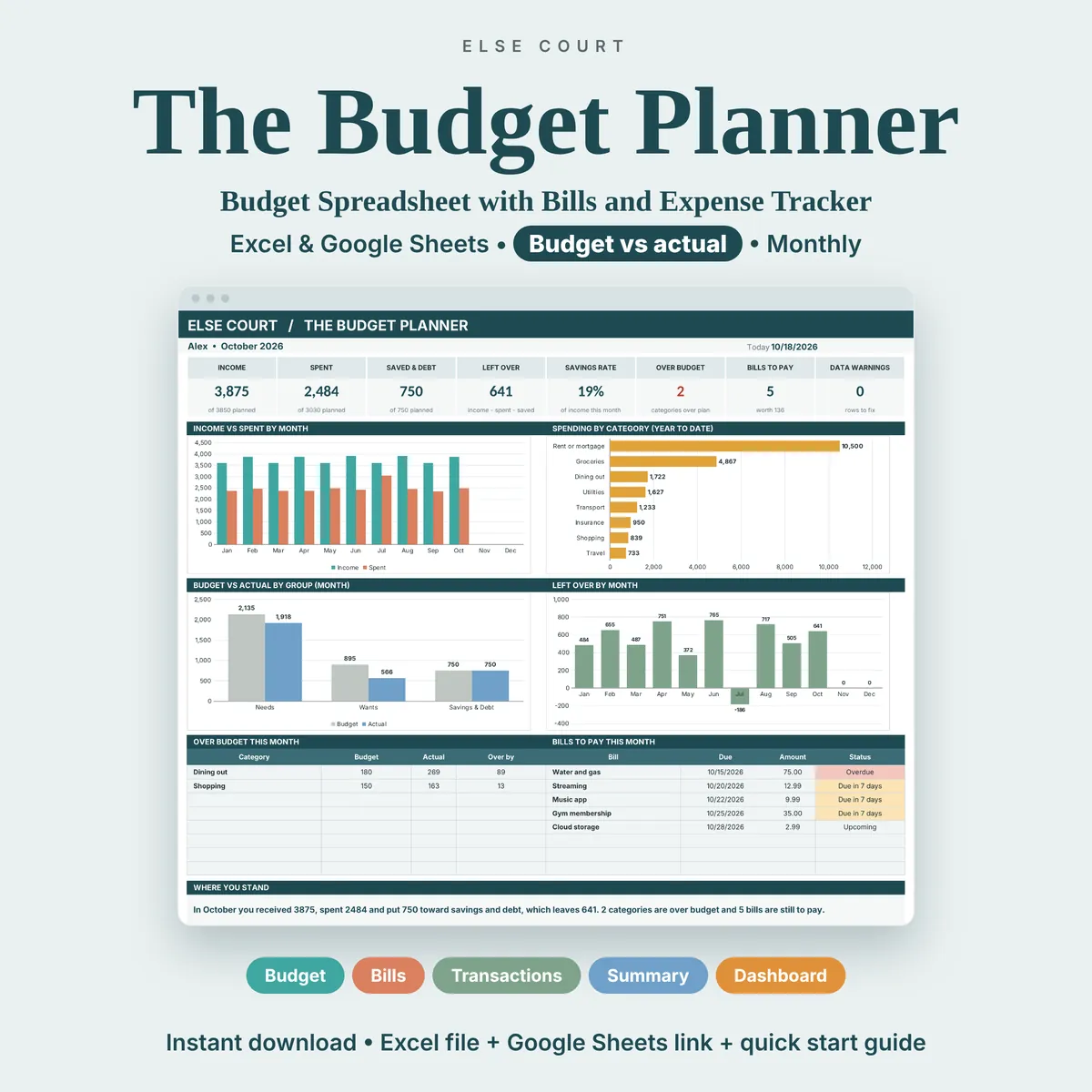
See how to make a monthly budget in a spreadsheet to find the extra amount.
How do you plan debt payoff in a spreadsheet?
- Make a table with one row per debt: name, balance, APR and minimum payment.
- Add a cell for the extra amount you can pay each month.
- Sort the table by balance (snowball) or by APR (avalanche) and mark the first debt as the target.
- Each month, apply the minimum to every debt and the extra to the target, then update the balances.
- When a debt reaches zero, add its payment to the extra amount and move to the next target.
- Track the month in which each debt is cleared and compare the two methods.
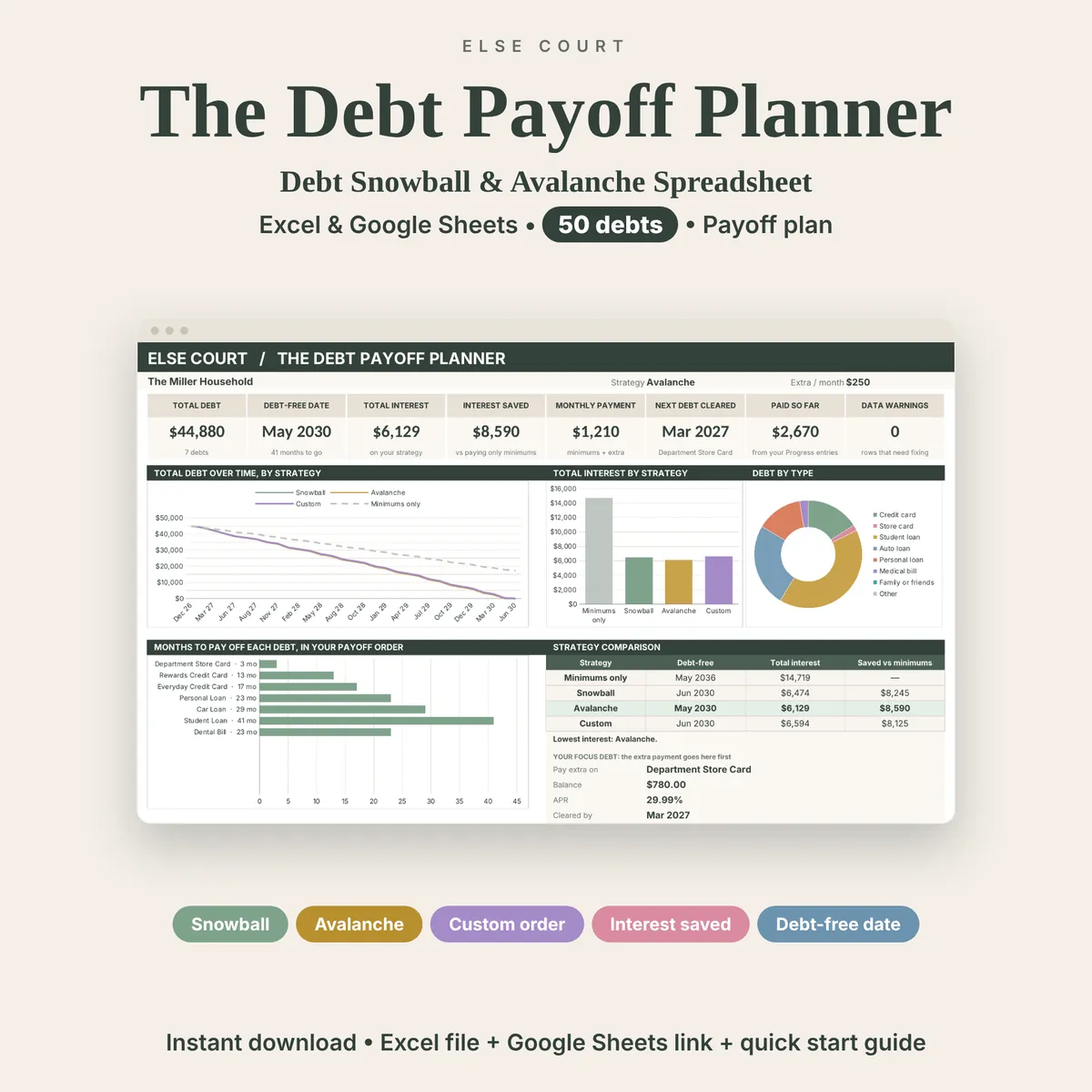
Doing the monthly interest calculation by hand is the slow part. The Debt Payoff Tracker sets up both strategies, compares them, and shows a payoff date and the interest for each method, so you can try different extra amounts. It is a planning tool, not financial advice.
Frequently asked questions
Is the snowball or the avalanche better?
Neither is better for everyone. The avalanche usually costs less interest, and the snowball can be easier to stick with. The best method is the one you will keep following.
Can the snowball cost more than the avalanche?
Usually yes, because it can leave a high-interest debt for later. The difference depends on your balances, rates and how much extra you pay.
Do I include a mortgage or student loans?
That is your choice. Many people plan the mortgage separately and use the snowball or avalanche for cards and personal loans. Include any debt you want to clear faster.
What if two debts have the same interest rate?
In the avalanche, pay the one with the smaller balance first, since it clears sooner.
Do I need a spreadsheet for this?
No, but a spreadsheet saves the monthly interest arithmetic and lets you compare both methods with the same numbers.
Photo: RDNE Stock project on Pexels, with an Else Court dashboard shown on the screen.